| TRIGGERPICKUPS: MAGNETIC VS. OPTICAL | |
| There recently has been debate concerning trigger methods used in distributors. The two most common racing pickups used in distributors are a magnetic pickup and optical pickups. Both pickups have been available for a number of years and in a variety of applications. The pickups perform the same job, triggering the ignition at the precise moment, just in a different manner. Both pickups accomplish their goals, however in the long run for endurance and accuracy throughout the entire rpm range, the magnetic pickup is the best choice. | |
| Magnetic Pickup Withstands Higher Temperatures (+150°C) No Mechanical Parts to Wear Out Not Affected by Moisture or Debris Simple 2-Wire Connection Creates a well defined Zero Volt Reference | Optical Pickup Affected by Higher Temperatures (+100 degrees C ) LED will wear over timet Affected by Moisture and Debris Three Wires: 12 Volts, Ground and Signal Reference Point is fixed and can be affected by temperature change Susceptible to Static Electricity |
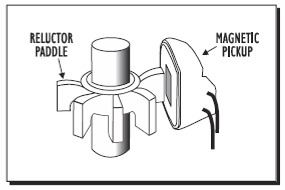
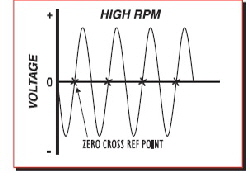
| OPERATION The MSD magnetic pickup acts as a generator creating a strong, clear signal. It is made up of windings placed in a magnetic field to produce an electric signal. With this simple design, there are only two wires to connect – so there are fewer connections to be concerned about. When a pole, or the paddle of the reluctor passes in front of the pickup, a voltage is created. As rpm increases, the signal strength increases as well giving it fast rise/fall times. At high rpm, this signal can reach well over 50 volts. This trigger signal will be addressed later in the text. A magnetic pickup is very reliable at high temperatures and in extreme conditions. Moisture, oil or mild debris will not affect the trigger signal making it the best choice in long races. Also, ozone and static electricity that builds inside the distributor cap will not affect the pickup’s output signal. | |
 | 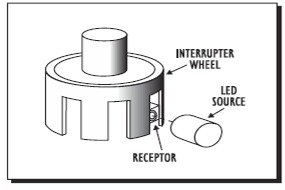 |
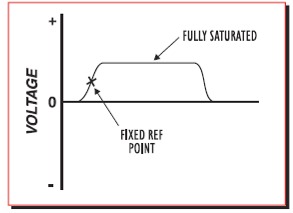
| An optical trigger uses a Light Emitting Diode (LED) and a photo receptor. The LED’s light beam is interrupted by a wheel that is connected to the distributor shaft. There are “windows” that let the LED beam shine through to the receptor which is respon- sible for producing the trigger signal. This signal is then usually processed into a 12 volt signal and then sent to the ignition as a trigger signal. This requires a three wire connection to each pickup; a 12 volt source, ground and the trigger output wire.An optical trigger is very susceptible to debris or contaminants that may enter the distributor cap. A layer of dust, moisture or grime on the lens of the LED or receiver will affect the signal strength resulting in the possibility of misfire or timing fluctuations. If the rise/fall (On/Off) time of the signal voltage changes there will be a shift in the reference trigger point resulting in a timing shift. Also, the LED’s light output degrades over time, especially in a high rpm environment with higher temperatures. A lower LED output may affect the saturation time of the photo receptor causing a weak output signal.These reasons alone express the strengths of a mag pickup’s reliability and endurance in racing conditions. There are also facts to consider concerning the signals that they create. | |
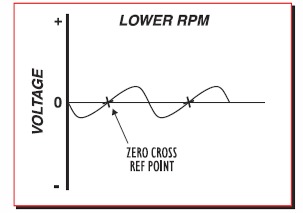
| Signal Strength and Flexibility By design, a magnetic pickup creates a positive and negative trigger pattern. As the reluctor paddle nears the magnet, a negative voltage is created. As it lines up with the magnetic pickup the signal begins swinging up and becomes a positive signal until the reluctor paddle passes through the field. When the signal becomes a positive voltage, it creates an easily recognizable point, the Zero Crossing. This point is extremely important because it is always the same trigger point. As rpm increases, the signal that the mag pickup produces becomes stronger, however this Crossing is always constant in regards to distributor shaft position. With the predictability of this Zero Crossing , a mag pickup’s inherent retard can be taken into consideration and adjusted within the ignition. Also, due to the very fast rise and fall time of the trigger signal it is much less susceptible to electronic noise which can affect triggering. | |
 |  |
| Magnetic Pickup Trigger Signal Conversely, an optical trigger creates only a positive signal so a circuit must be added to set a fixed reference point for triggering. Usually this reference point is about half the amplitude of the optical signal. If the saturation time of the receptor changes due to a weak LED, debris or heat, this reference point is going to be affected which will cause a shift in the timing. As the window of the interrupter begins to enter the beam of the LED a signal is created. During this process, the receiving sensor begins to be uncovered and starts to turn “on”. Next, it reaches its maximum (saturation) point, then begins to be covered followed by being completely turned off. | |
 | |
| Optical Trigger Signal MSD’s Magnetic Pickups have proven their endurance and precision on race tracks around the world. Don’t settle for an unproven design – use the name and product you trust; MSD Ignition. If it wasn’t the best, MSD wouldn’t use them.Article Provided by: MSD Igniton | |
Ignition System – Trigger Pickups: Magnetic vs. Optical Article by MSD Igniton
