When old cars were plentiful and cheap to buy we passed up ones that were too rusty or had been modified so much that they were considered beyond repair. As time passed we began to consider saving old hulks that had been deemed unsalvageable now that reproduction parts were available for many of the popular models.
Unfortunately, I was ahead of the trend when in the early ‘70s I tried to save an old “Deuce” roadster from the salvage heap, after it had lived a tough life as a racecar. A few reproduction parts for this popular car were available at the time, but they were not very good because the demand did not make the use of very expensive production methods for these items cost-effective.
I enlisted the assistance of some fine craftsman with the finest of coachwork skills to try reconstruction of the rear deck area of the roadster. They used salvaged pieces from a ’32 Ford Cabriolet body that I had obtained from Ronny Smith in Odessa, TX after I had covered the 1973 NSRA Street Rod Nationals for the magazine that year. Those pieces were combined with a couple of upper and lower reproduction panels from a West Coast parts maker.
I had no deck lid at the time so the bodyman had to rely on the other parts for proper fit and alignment of the opening. Unfortunately, the upper panel was flat instead of crowned like an original “Deuce” rear deck. This created a mismatch between the deck lid and upper rear panel. Attempts to create the crown in the panel were unsuccessful because the opening was pulled together at the top when we tried to curve the upper panel to match the proper contour.
I tried to find another upper panel for years after that but this welded-in panel from a now valuable car model was not to be found at a reasonable price. Expert metalmen could reproduce one for me but they were far beyond my budget. So the project sat in limbo for some time before companies like Brookville and SAR began producing faithful, all-steel reproductions of popular sheetmetal.
These new items make it possible for an individual to replace rusted or damaged panels with only basic metalworking skills. For more challenging repairs like those needed on my car I had to rely on the expert skills of Carl Brunson to get the desired results. He began by removing the old panels, properly installing the new parts and reconstructing the other damaged areas. Shown here are the steps that he took in the repair of the rear deck area. Fitting of the deck lid and installation of Brookville doors will be shown in future articles related to this projects completion.
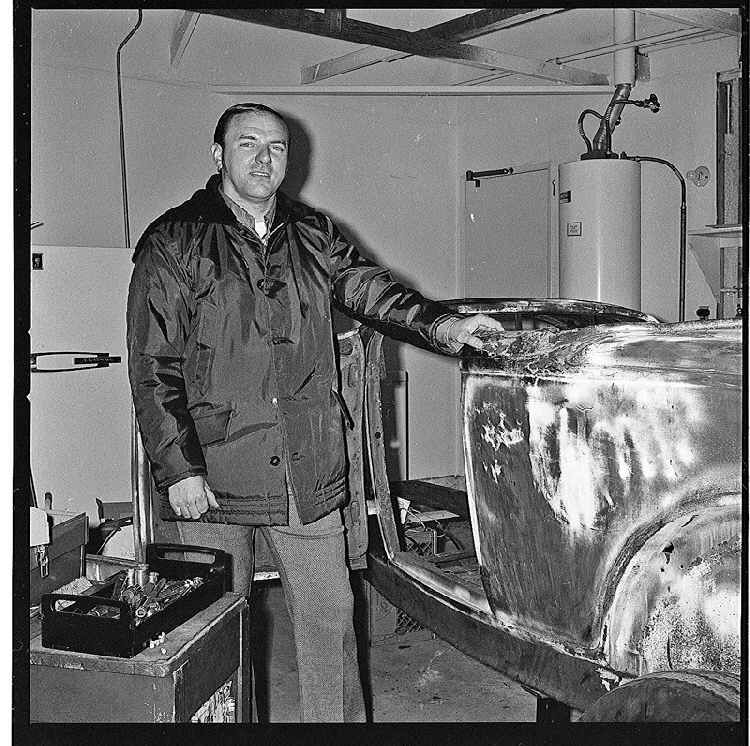 |
| This is me with the ’32 Ford roadster “basketcase” that I bought in the early ‘70s. Over the years it has gotten better while I have progressed in the opposite direction. Maybe they will finally come out with reproduction parts for us too. |
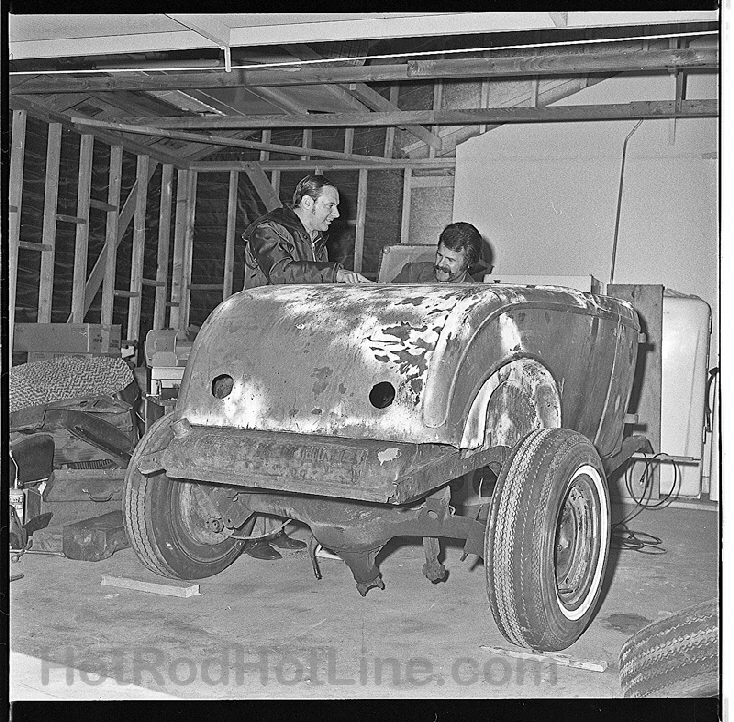 |
| Jerry Slattery, fellow former Street Rodder Editor, and I discuss our plan to restore the rear of this former racecar body to it’s original state. |
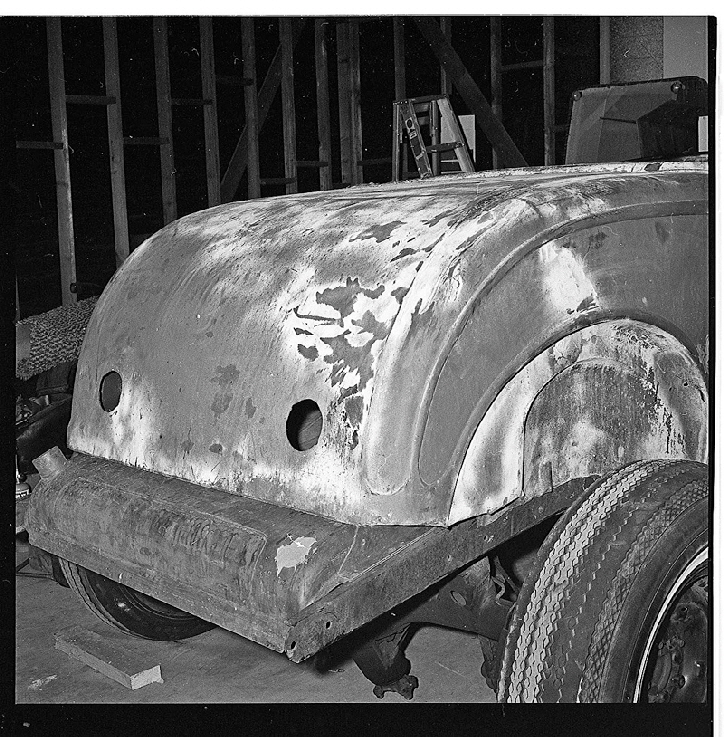 |
| Internal surround structure for the deck lid had been removed crudely with a cutting torch and a sheet of steel welded over the entire rear deck area. |
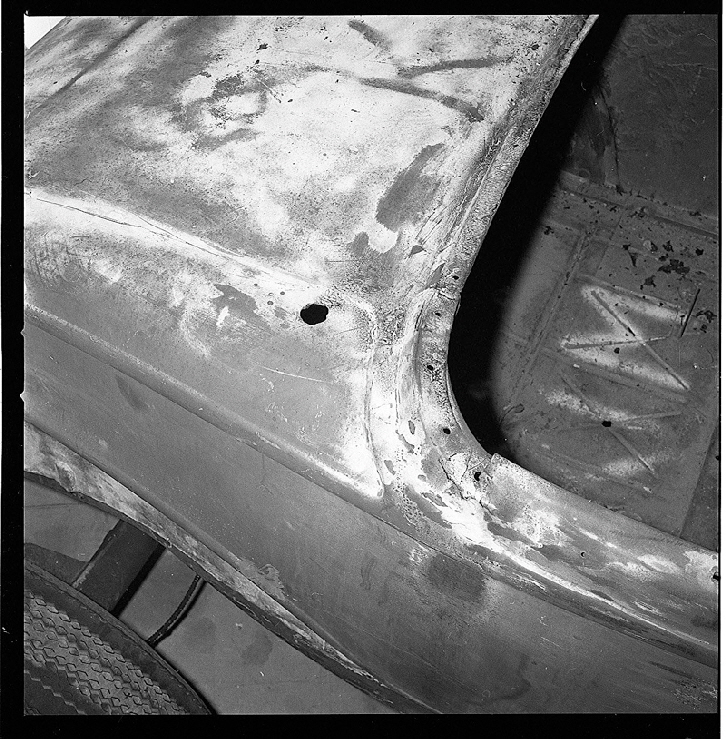 |
| View from above shows the damage that was done while making this modification. Fortunately the rear of the cockpit and quarter-panels were left untouched. |
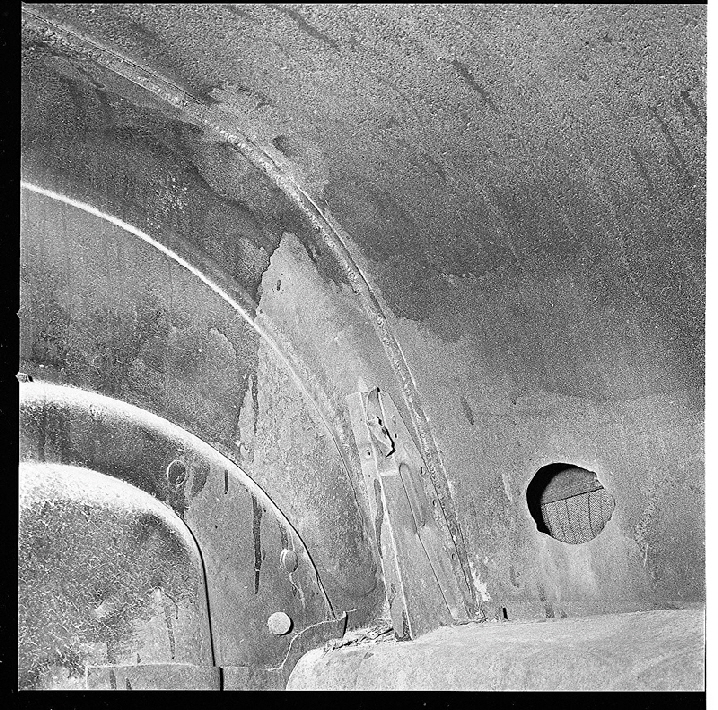 |
| This shot from inside the rear of the body shows how much inner structure that had been removed and the weld mating the new sheetmetal to the old quarters. |
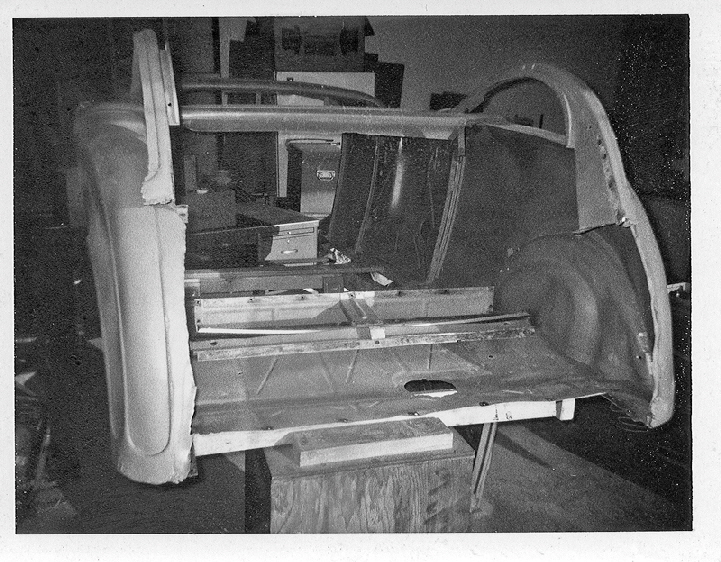 |
| This Polaroid taken of the body after the rear sheetmetal add-on had been removed shows the donor section with the bottom section detached so that it can be riveted back in place like the original. |
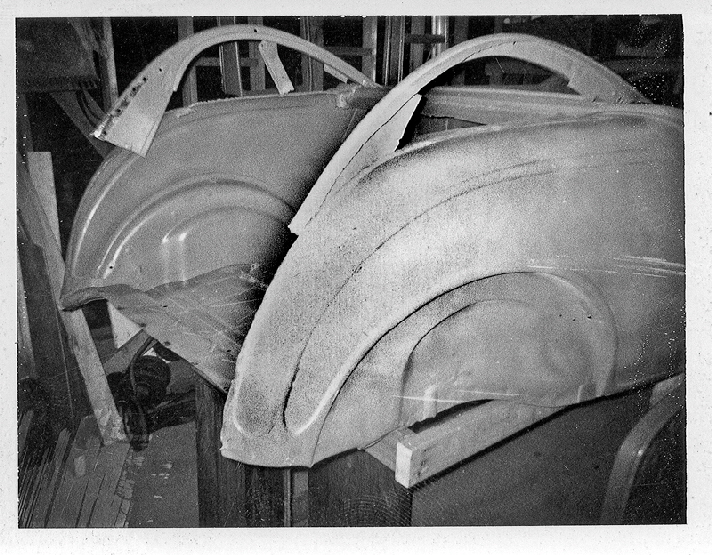 |
| It was a real stroke of luck that I was able to find this scrapped section from a ’32 Ford Cabriolet. If this had to be ordered from someone like Brookville it would require ordering of both rear quarters and all of the deck area structural panels. A costly proposition. |
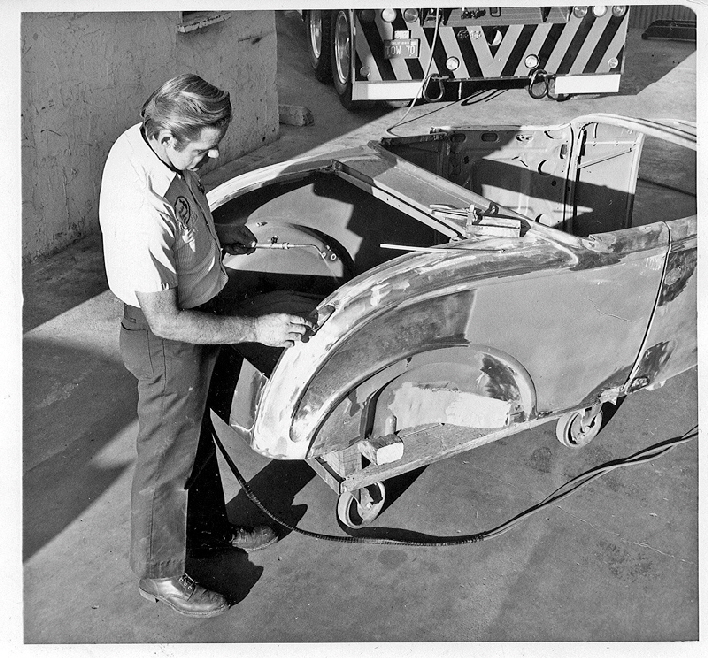 |
| Expert bodyman Ross McGee performed the original grafting of the rear surround and installation of the reproduction panels. He also reconstructed the lower corners, filled the cowl vent and fixed other tweaks in the otherwise stock body. |
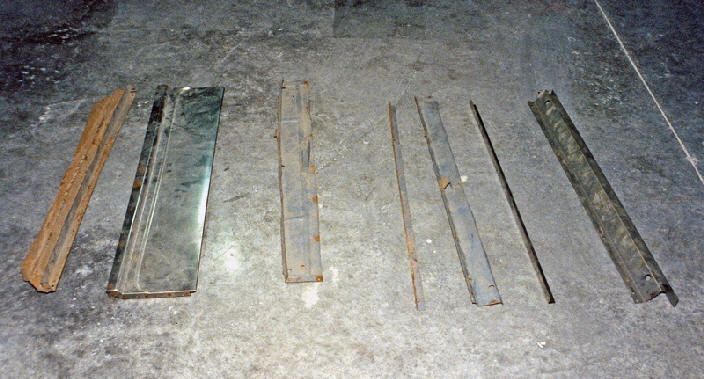 |
| From left to right in this photo are the original remains of the top panel, the new Brookville top panel, original lower floor panel, old rear deck lid threshold and the new Brookville threshold. |
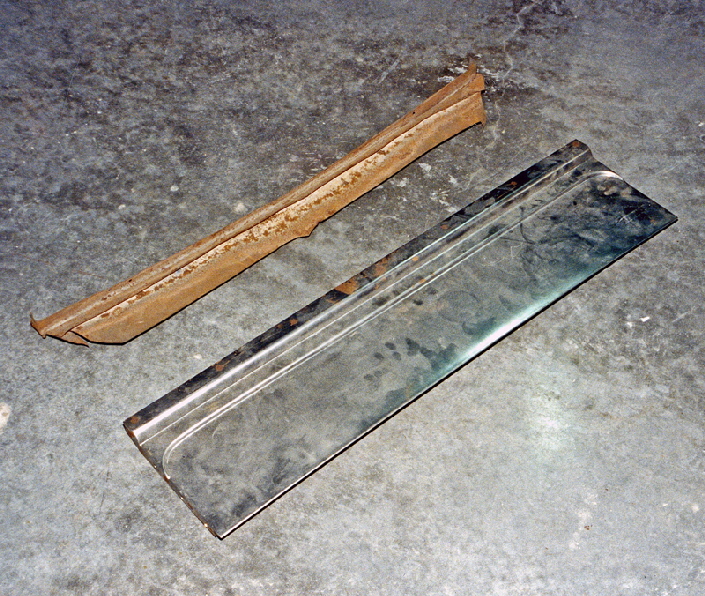 |
| When the original modifications were made they torched the rear of the upper panel off and crudely welded a new panel over the entire trunk lid area. That is the new reproduction panel from Brookville in the foreground. |
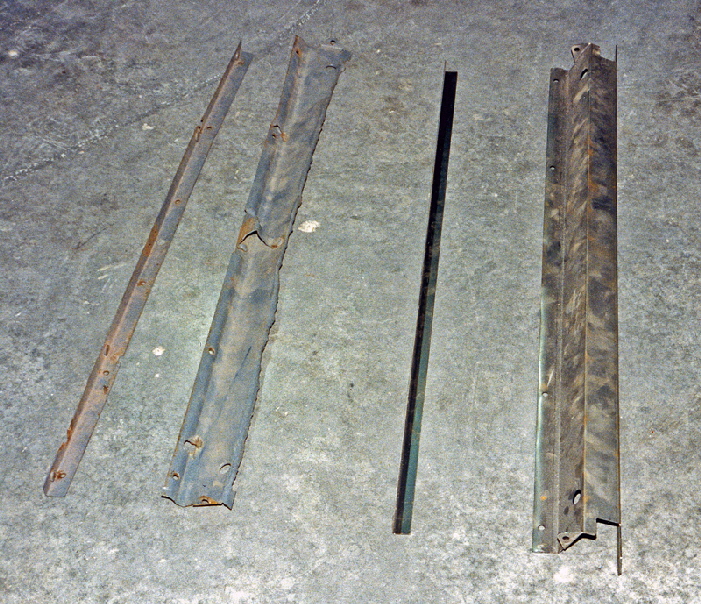 |
| Items on the left are what were left of the threshold pieces for the deck lid; at the right are the new reproduction pieces. |
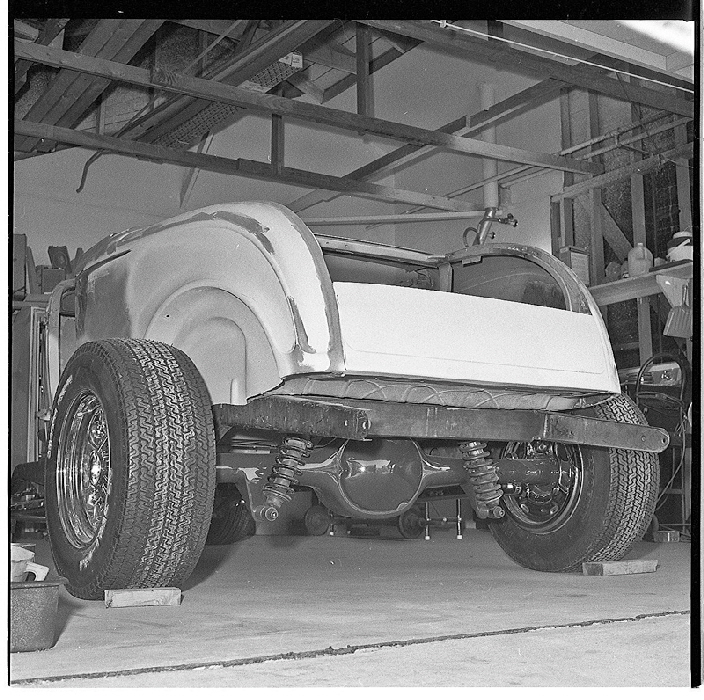 |
| Lower panel was the right contour and fit correctly on the original repair. Only the outer skin was a new reproduction part |
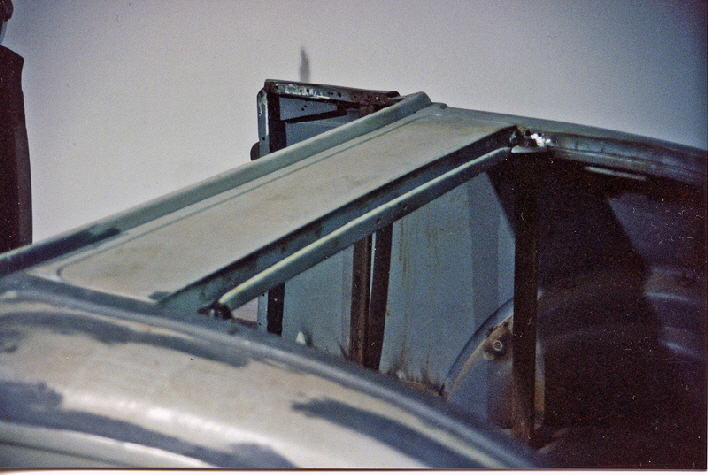 |
| The first upper replacement panel looks just like the original would, until a deck lid was installed |
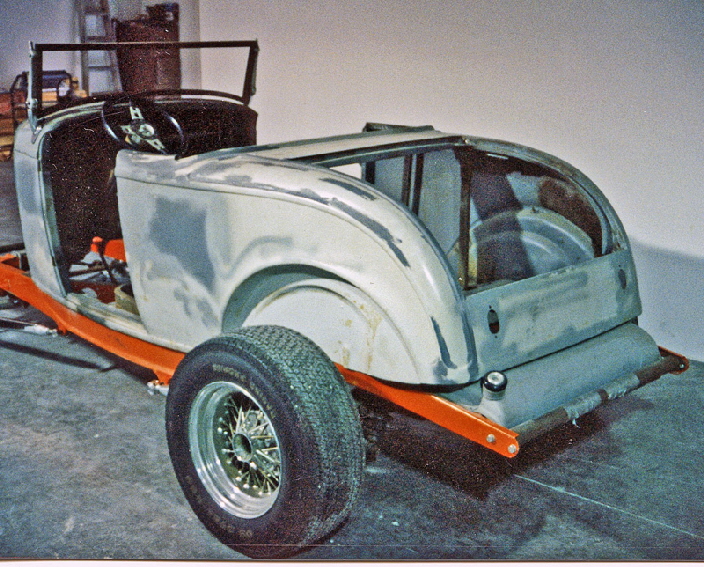 |
| Looking at this shot of the repaired “Deuce” roadster body gives no indication of the major problem created by the improperly crowned upper panel. |
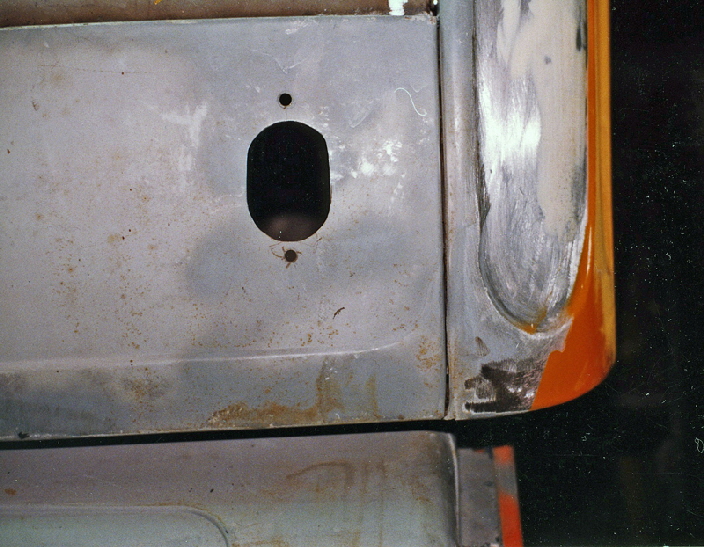 |
| Lead was used in the reconstruction of the lower right and left corners of the body and raised character lines that surround the deck lid opening. |
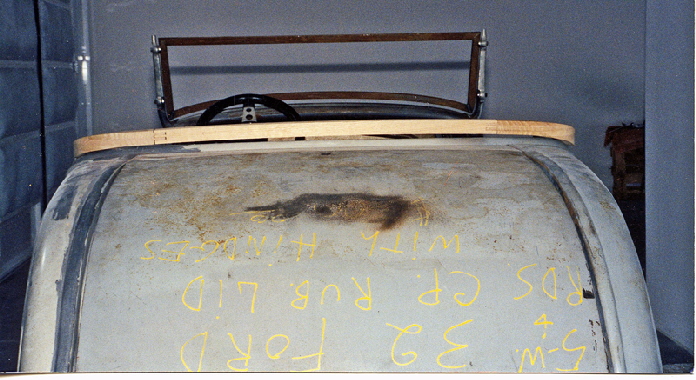 |
| The normal crown in the deck lid can be seen rising above the flat upper panel. Placing the wood cockpit rear surround in place makes the gap even more noticeable. |
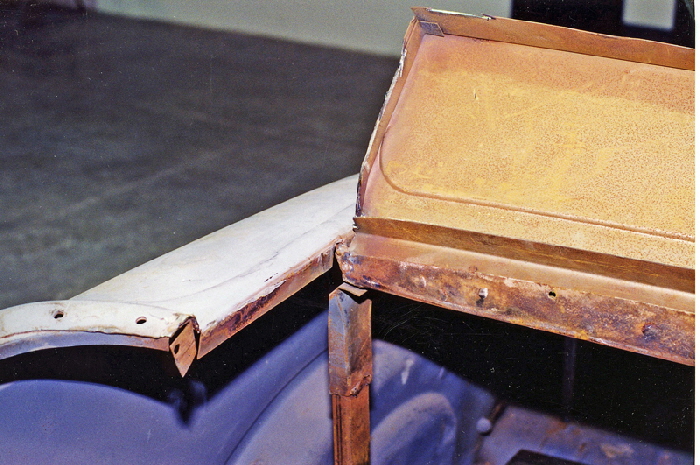 |
| Once the old panel was removed the flanges could be cleaned up in preparation for the installation of the new panel, seen standing up at the right. |
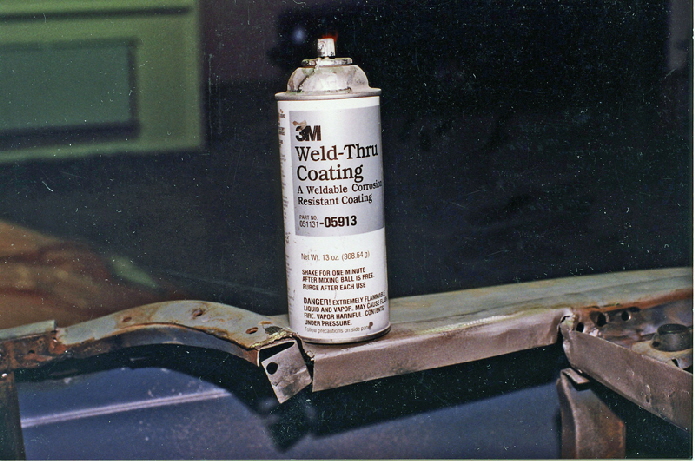 |
| Rust is sanded or wire brushed off, then the metal coated with a weld-thru primer that is designed to survive the heat of the welding process. It is available at most professional paint outlets |
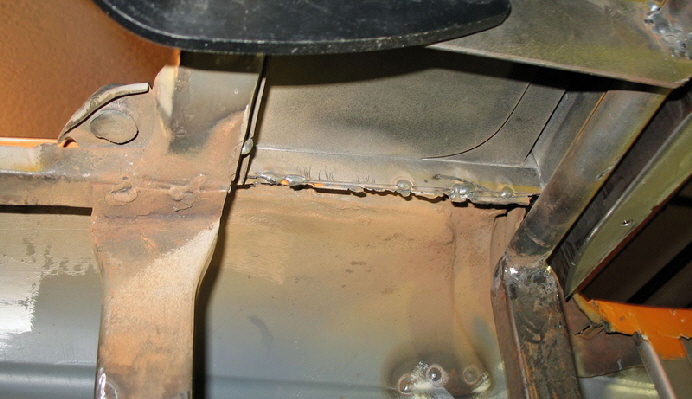 |
| Welds are made on the under side of the joints where they will not show. Seams on the topside remain open just like on the original “Deuce” body |
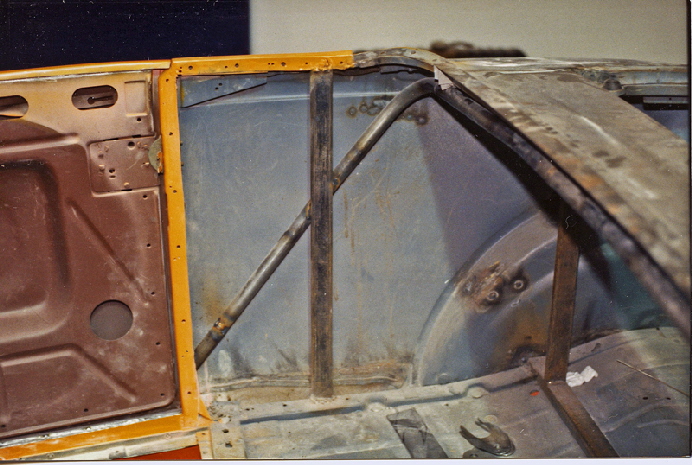 |
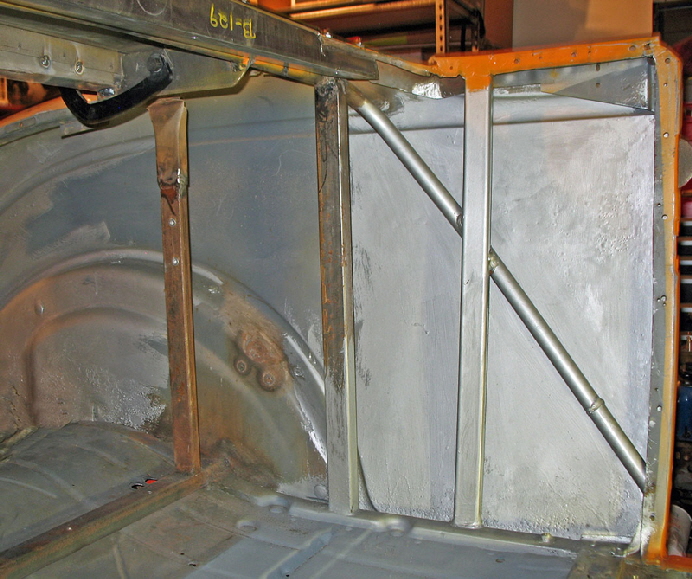
| Carl added a 1-inch OD tube as a support for the roadster quarters behind the doors. This provides a lot more rigidity to the body. “Deuce’s” are famous for popping the door open when going over irregular surfaces because the body twists releasing the old style door latches |
 |
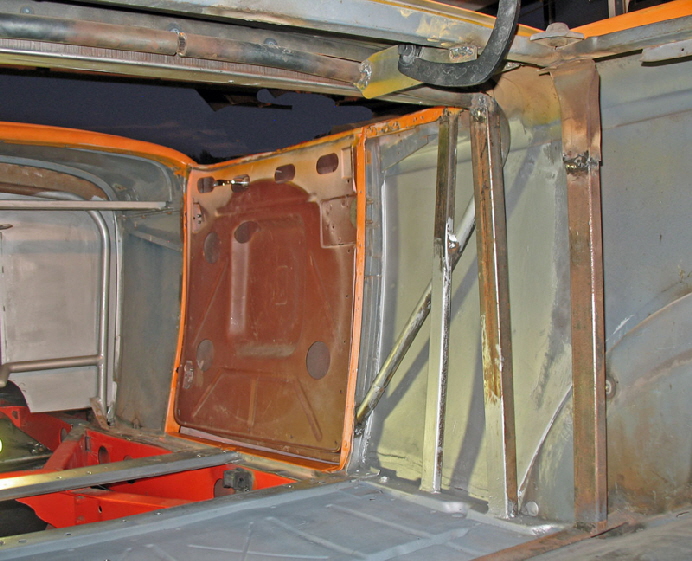
| I added additional support with 1”x 2” steel tubing as a vertical brace under the round tubing. U-channel was also added inside each quarter behind the door where your hip normally contacts the side panel |
 |
| Round tubing support was fabricated in two halves so that it could be inserted in behind the uprights, already in place. Smaller diameter tube was placed inside the tube, and then welded, completing the connection. Rectangular tubing was also used to complete the vertical drip rail support that was originally made from stamped sheetmetal |
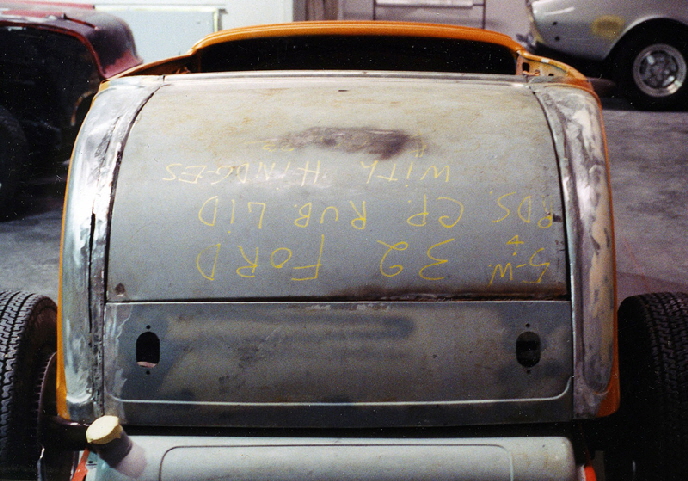 Contours of the top panel now match that of the deck lid. Left side of the opening is still out of alignment. This will be fixed when the deck lid is finally fitted. Contours of the top panel now match that of the deck lid. Left side of the opening is still out of alignment. This will be fixed when the deck lid is finally fitted. |
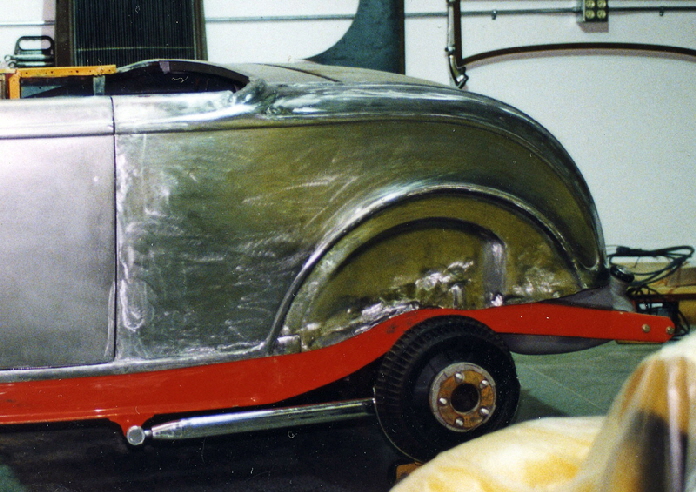 |
| This angle shows just how much crown that there is to the rear deck area. At this point the body had been stripped to bare metal showing just how much real “Deuce” sheetmetal is left of this real steel body. |
| Reproduction parts and complete bodies are now available for many of the popular old car favorites. Salvaging one that has had a rough life is much more feasible now than it was 20 or 30 years ago. Reproduction parts fit well on the new repro bodies but usually need some tweaking to make them fit on early iron. This rear deck repair took some major work to recreate the original “Deuce” body contours. However, fitting of Brookville reproduction doors and massaging the old deck lid to fit on this car were not as big a challenge. Those will be covered in future Hot Rod MD articles about salvaging old cars. |
