| Voltage Drop PreventionDennis Overholser Painless Performance | ||
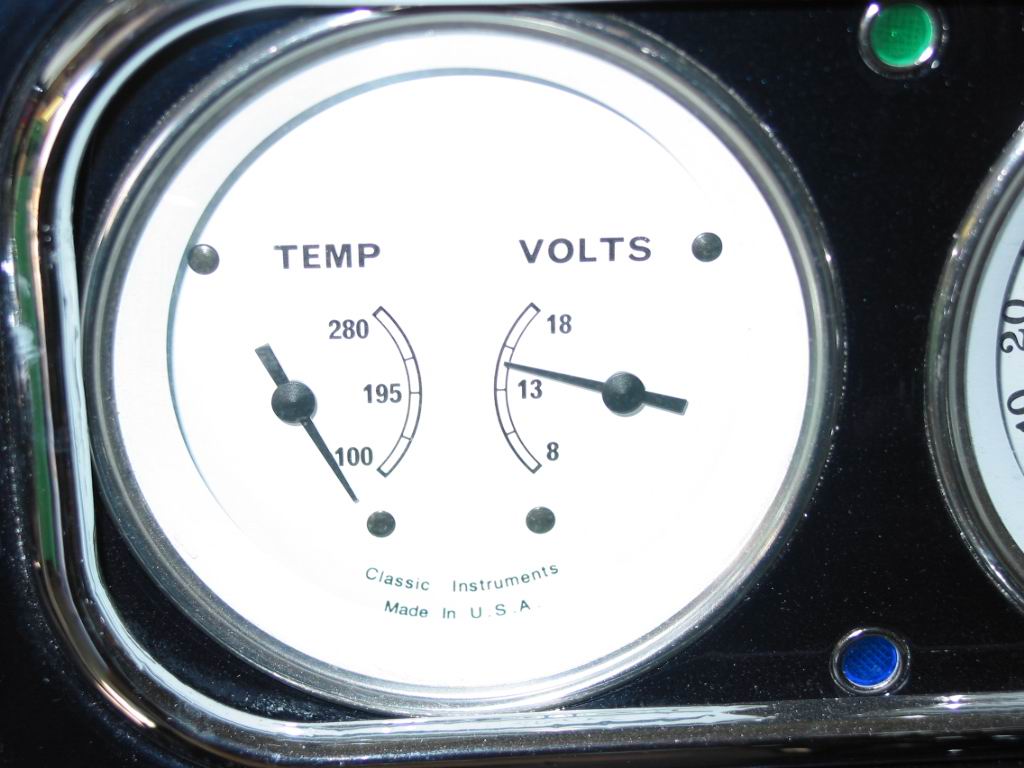
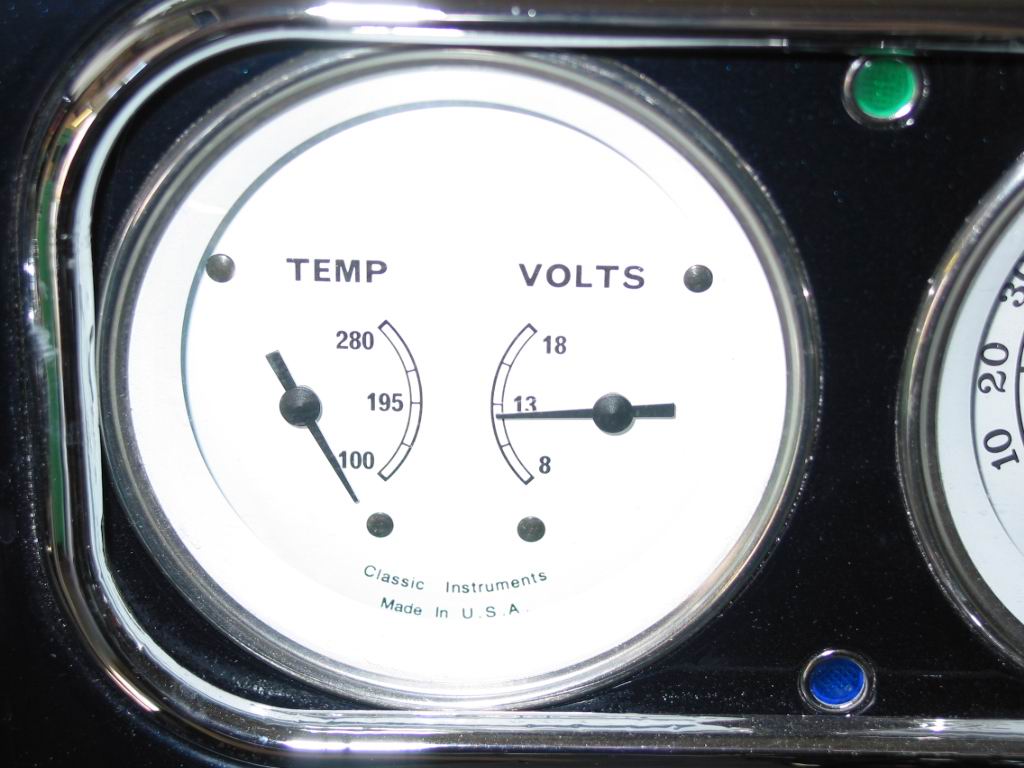
| After attending the recent NSRA Street Rod Nationals, I came home with several concerns about the electrical systems in Rods that are being built today but more so of Rods that have been built for several years. Electrical systems and add on accessories are changing so rapidly and demanding so much more, it is almost impossible to keep up. Alternators are twice the size of ten years ago to try to keep up with current demand of creature comforts. I spoke with a rodder that purchased a wiring harness 9 years ago and is just now ready to install it. 9 years ago we had the wonderful 65 amp Delcotron alternator and maybe a small electric fan. The wiring in the harnessing then reflected the typical loads of the time. What happens now when we add a 140 amp alternator to power an amp guzzling electric fan, air conditioning, halogen lights power this and power that. Then we had an amp gauge that might read 60 amps, today it would go up in smoke in the first 10 minutes if it lasted that long. Another rodder was having problems with his system. Every time his electric fan came on the voltmeter went to 10 volts and the engine died. His electronic fuel injection computer required 10.5 volts to operate and was starved for current due to the fan. Voltmeters are today’s way of seeing what the vehicles electrical demands are doing and how these demands are being met. They can tell us many things from how the charging system is functioning to if the loads on the wiring are too great. Knowing how to read the voltmeter is the key. Relays are today’s answer to power transfer of current to those hungry creature comforts. Relays are a lot like voltmeters. Proper use will provide relief of worry about what’s happening in your electrical system. Photo # 1 shows a voltmeter reading about 14 volts. This is normal for most charging systems ( 13.6 to 14.8 ) with no excessive load on the electrical system. A slight change of maybe 1 volt will probably occur if the lights are turned on or the windows are rolled up. Photo # 2 shows a much larger voltage drop. This can be caused by the electrical system not capable carrying enough current for a specific load, such as an electric fan. If such a drop occurs on your voltmeter a couple of things can be done to locate the draw. First, with the engine running, check the output at the back of the alternator and see if it is the same as what the voltmeter is reading (photo 3). If it is higher, the problem is excessive load on the fuse center, wiring or ignition switch ( most ignition switches have a maximum capacity of 60 amps ). | ||
 |  | |
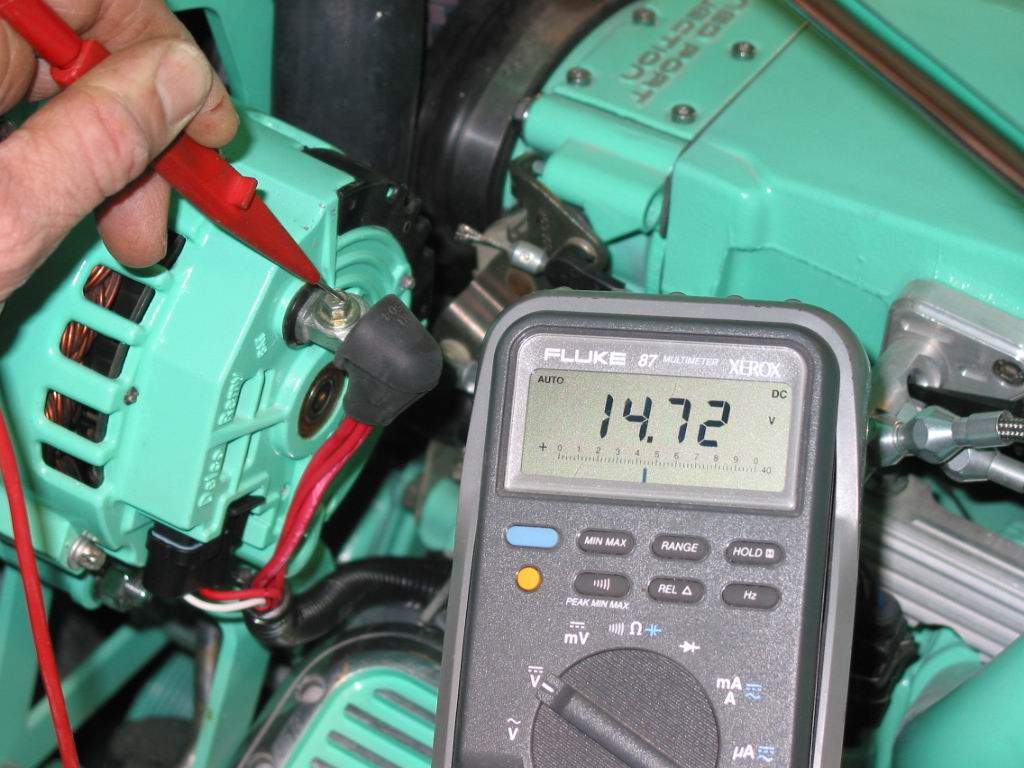 | 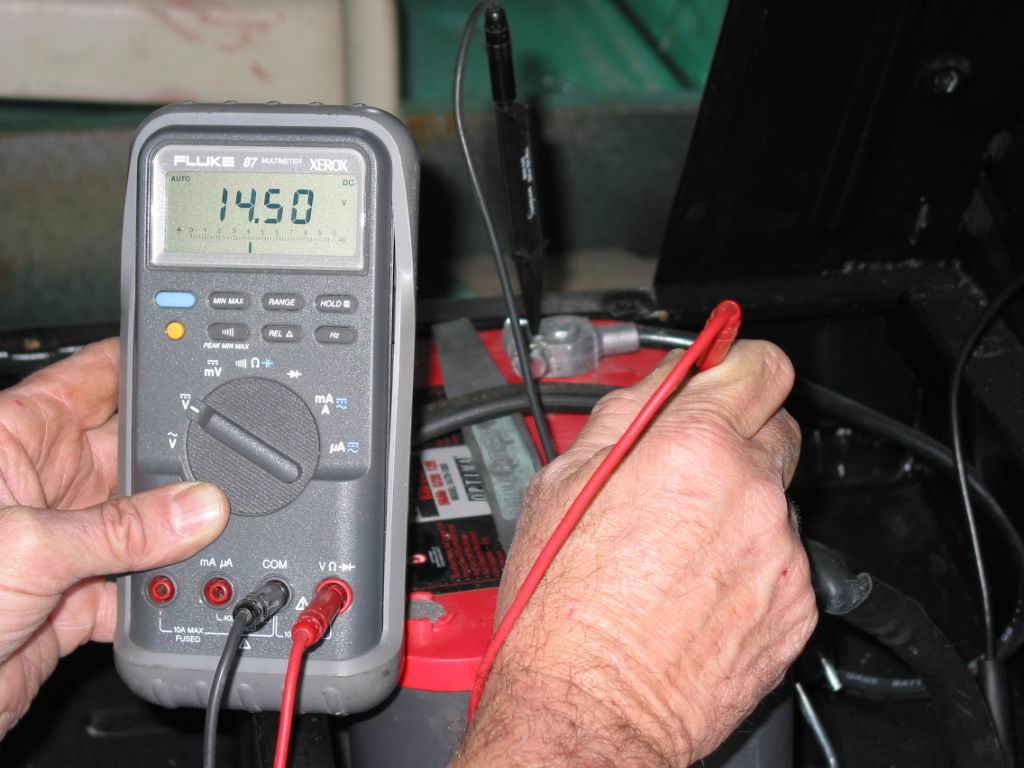 | |
 | If the output is the same, the belt driving the alternator may be slipping or the alternator may have an internal problem. Once again we are looking for voltage between 13.6 and 14.8. Second, check the voltage at the battery, it should be the same as the alternator output (photo 4). If it is lower by more than ½ volt, there is resistance or a bad connection between the two. Here it is shown that the voltage drop is about 2 tenths of a volt which is just fine. With the new 100 amp plus alternators, an additional wire, 10 gauge or larger, between the alternator and the battery source ( starter solenoid ) is recommended. | |
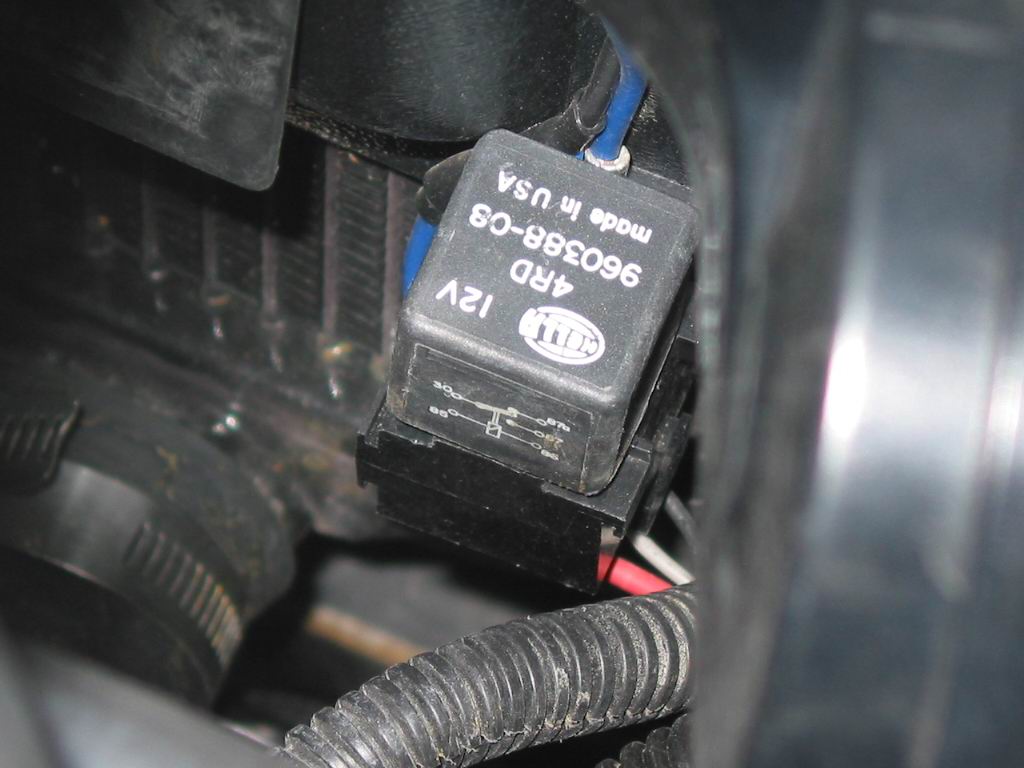
| If turning off a specific item allows the voltmeter to return to it’s normal reading then that item is in need of a relay to allow current to be supplied directly from the battery source. What does a relay do? It is a device that transfers electrical current directly from the battery/alternator source to the device ( electric fan, air conditioner etc. ) instead of through a switch. The switch controlling the device now turns the relay on or off. Since a relay only requires about as much current as a dash light to activate, the load on the switch and its wiring is almost eliminated. The contacts inside the relay are designed to carry high amounts of current and are connected by heavy wires between the power source and the load. If relays are so good, why aren’t they used in more circuits? They should be! In new cars and trucks, relays control almost every circuit. Proper installation of relays is just as important. Relays require protection from overloads ,as any circuit does, which is commonly done with automatic re-set circuit breakers or maxi-fuses. Relays need to be placed in as close to a direct line from the power source to the load as possible to prevent any voltage drop. A side benefit is that motors and solenoids will last longer and be more efficient when ample voltage is supplied to them. Photo 5 shows a relay mounted on the radiator support for the electric fan. | ||
| An example, of how important proper voltage plays a big roll in efficiency, is an electric fan. Automobiles operate on direct current ( DC ). A DC motors’ revolutions per minute ( RPM ) are directionally proportional to voltage. Let’s say that your fan has a maximum efficiency rating of 2800 RPM at 14 volts. What happens at 12 volts? 10 volts? The fan probably runs at 2400 and 2000 RPM’s respectively. Now you know why that green stuff keeps coming from under the radiator cap! In summary, the electrical system you have purchased today may be out dated in a couple of years. Electronics in automobiles, as in your PC or cell phone, change constantly. Harness manufacturers are constantly up grading wire size, terminals, routing and connections to try to stay ahead of the demands. If you have a harness more than a couple of years old and are just now installing it in your ride, be safe, contact the manufacturer and be sure it has the upgrades needed to comply with your needs. For more information on how to upgrade your vehicles electrical system contact. | ||
| Painless Performance Wiring | ||
Voltmeters/ Ammeters: Voltage Drop Prevention Article by Dennis Overholser
